Elephant Crafts and Activities for Kids
How to Make Crafts and Activities Relating to Elephants
Paper Plate Elephant Craft
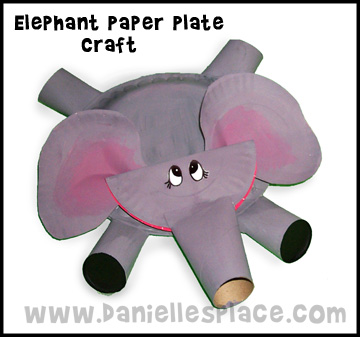
What you will need:
Two Dinner-sized Paper Plates (heavy duty is best, but the cheap ones will work)
Three Snack-Sized Paper Plate
Four, 5-ounce Dixie Cups
Cardboard Tube or TP Roll
Grey, Black and Pink Paint
Hot Melt Glue Gun or Stapler
Tacky Glue
Black Markers
How to Make the Elephant Paper Plate Craft:
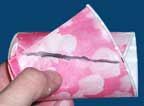
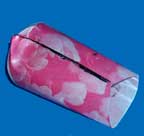
1. Make the four legs first. Cut the side seams (the part of the cup that has been glue together) out of the cup and then squeeze the sides together rolling the sides over each other and glue them together with a hot melt glue gun. If you don't have a glue gun, staple them together. You want to make the top part of the cup much smaller. Do this for all four legs. Make a crease on both sides of the legs at the top of the cups so that the seams are on the bottom. Cut about one inch down on each side and slide them onto a dinner sized paper plate that is set upright so that the seams of the legs are facing down. Glue or staple them to the plate.
2. Turn another dinner sized paper plate upside down and glue or staple it on top of the plate with the feet.
3. Paint the feet black and the legs grey and let them dry while you work on the head.
4. To make the head paint the bottom side of a snack-sized paper plate and cardboard tube or TP roll grey and let them dry. Fold it in half when it is dry so that the grey is on the outside. Flatten one end of the roll and glue it to the head fro the trunk.
5. Cut out two ears shapes from snack-sized paper plates and glue them to the back of the head.
6. Glue the head onto the body as shown in the picture.
7. Draw eyes on a piece of card stock, cut them out and glue them to the head.
©Copyright 2008, Digital by Design, Inc. - See Copyright Information
Free Elephant Craft
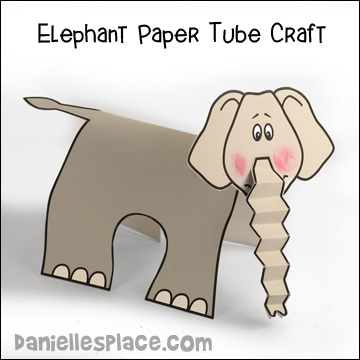
What you will need:
Paper Towel Roll
Card Stock
Glue or Tape
Crayons or Markers
What to do:
1. Print out the elephant patterns and cut them out.
Member's 
Instant Digital Download
2. Color the body, head and trunk.
3. Glue the body onto a paper towel roll that has been cut to five inches.
4. Fan fold the elephant’s trunk and then tape it onto the head.
5. Cut a strip about two inches long by one-half inch. Fold it in half and glue one half to the body of the elephant and one to the head to attach it to the body.
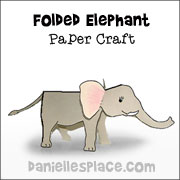
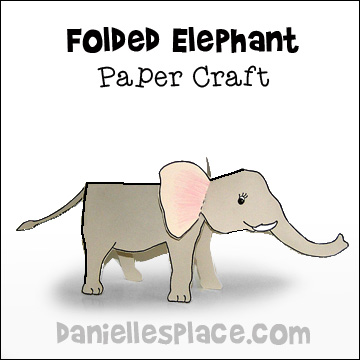
Folded Paper 3D Elephant
What you will need:
Card Stock (Heavy paper)
Scissors
Glue
Crayons or Markers
How to Make the Elephant Craft:
1. Print out the pattern and cut them out. (Available to members on The Resource Room.)
Member's
Instant Digital Download - - Giraffe, Zebra, Elephant and Rhinoceros
2. In class have your children color the patterns.
3. Fold the body pattern in half along the back.
4. Fold the neck on the dotted lines both backward and forwards as shown in the picture.
5. Unfold the giraffe, elephant and zebra and fold up the neck as shown in the picture.
6. Press down on the middle fold and up on the slanted fold to fold up the neck as show in the picture.
7. Glue on the ears. Glue the top of the head together just above the eyes. Glue on the tail and spread out the legs so the animals stands up.
©2005, Digital by Design, Inc. – See Copyright Information
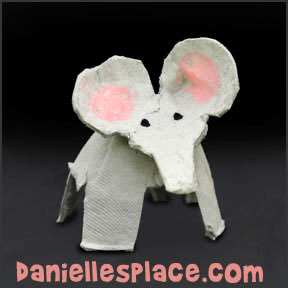
Egg Carton Elephant Craft for Kids
What you will need:
Paper Egg Cartons
Markers (Any type will work)
Paint (Any type)
Scissors - Use small scissors with very short blades that are good for snipping if you have them. This will make it much easier to cut the egg carton. Fiskars Kids Classic Pointed Tip Scissors work great.
How to Make Egg Carton Elephant:
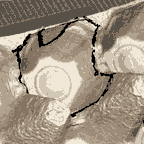
1. To make the elephant's body cut a cup (the part that holds the egg) off the egg carton.
Cut a half circle shape out of the cup on the side that was the outside edge of the carton to make the leg shapes. (See picture to the right).
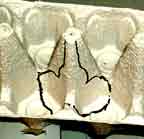
2. To make the head, trunk, and ears print out the pattern and cut it out.
Member's
Free Digital Download
Place the pattern so that the trunk part covers one of the long center cones and each ear is inside a connecting cup. (See picture to the left.) Trace the pattern onto the carton and cut it out.
You don't have to use the pattern; you can just follow the diagram to the right.
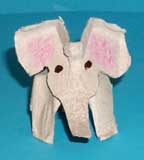
3. Color or paint the head and body if desired and add eyes. You can also glue on tiny wiggle eyes if you would like.
4. Glue the head to the body.
©Copyright 2003, Digital by Design, Inc. - See Copyright Information
Elephant Games
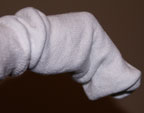
Pass the Peanut Relay Game - Tell the class that they are going to pretend to be elephants. Give each child a sock to put on his or her hand (this is their trunk). If you have a large class break them in half or into teams. Give each team a peanut. The first team to pass the peanut to all the team members and back to the first player wins. If you have a small class just have the children pass the peanut from person to person until it comes back to the start. Use a timer to see how long it takes and then do it a second time to see if they can beat their time.
Guess What is in the Box Game - Bring in a box full of different objects. Have the children take turns being the elephant. Children put socks on their hands and then reach into a box and try to guess what they are feeling with their "trunk".
Elephant Walk - Did you know that elephants walk on their toes? The soles of their feet are made of thick elastic pads that flatten with each step. Because they are so big and weigh so much, this elastic pad gives them bounce in each step. Have the children walk on their toes. Then, try to do some pattern walking. Have everyone stand in a circle. Then, call out a pattern and have everyone walk that way around the circle. For example, step, slide, tiptoe, step, slide, tiptoe. Give each child the opportunity to take up the pattern.
©Copyright 2006, Digital by Design, Inc. - See Copyright Information
Elephant Art
Elephants Can Paint Too! by Katya Arnold
Katya Arnold teaches children and elephants how to paint. In her book she explains how elephants are a lot like the children she teaches -- they even like cookies. They love to wrestle, climb on each other, and act silly. They scream and even cry when they are sad.
Just like children, each elephant is unique. They all have their own techniques when it comes to painting. Some elephants wrap their trunks around the brush to hold it, while others hold it inside their trunks. Some elephants drag the brush over the paper, while others dab. Some will paint for as long as an hour, while others are finished in just a few minutes. Most elephants don't paint real things, but they can be taught to paint trees and flowers. Many of the paintings are sold and the profits are used to help the elephants. Go to www.elephantart.com to watch videos of elephants painting and view their masterpieces. You can even buy one yourself!
Paint Like an Elephant - Tape a large paint brush to the top of your children's hands to give them a different feel for the brush. Encourage them to pretend they are elephants and use long flowing stroke and dabs of paint to make their pictures.
*One elephant painting sold for $39,000!
Elephant Recipes
1. Baked Elephant Ears
What you will need:
One Stick of Pie Crust Mix
Medium Mixing Bowl
Measuring Spoons
Hot water
All-purpose flour
2 Tablespoons Sugar
2 Ttablespoons Ground Cinnamon
How to Make Elephant Recipes:
1. Have an adult break the pie crust into little pieces in the bowl. Add three tablespoons of hot water. Mix with a fork until the dough sticks together.
2. Sprinkle a wood board with flour. Pat your hands with flour. Form the dough into a big ball on the board and divide into four parts. Form each part into a ball. To make the elephant ears, use your whole hand to flatten each ball. Press hard so that the dough gets thinner. It should be about 1/4 inch thick.
3. Place each piece of dough onto an ungreased baking sheet. Mix the sugar and cinnamon together. Place the mixture in a shaker. Sprinkle the cinnamon-sugar topping on the elephant ears. Be careful not to get the sugar on the baking sheet. Have an adult bake at 350 degrees for 20 minutes or until golden brown. Cool. (Sent in by Narita Roady)
2. Make Elephant Heads
What you will need:
Can biscuits (each child needs two biscuits)
Cinnamon sugar
Two Raisins
A Craft stick and Foil or Baking paper
How to Make Elephant Heads:
1. Give each child two biscuits. Have them place one biscuit and flatten just a little.
2. Next have your chidlren cut the other biscuit into three pieces with the craft sticks. Cut two pieces the same size for the ears and one not as wide for the trunk.
3. Add the two ears to the sides of the other bisquit and the trunk to the middle. (Have them press the edges down so they stick to the biscuit .
4. Add raisind for eyes. Sprinkle with cinnamon sugar. Bake until golden brown. The children love to eat them while still warm. (Sent in by Narita Roady)
©Copyright 2009, Digital by Design, Inc. - See Copyright Information
Elephant Math Games
1. Practice Counting - Pretend to be elephants by putting a sock on your hand. Place a bowl of peanuts on the table. Grab some peanuts with your "elephant trunk". Count how many you can pick up. If your child can already count well, use this game to practice your addition facts. Pick up two handfuls of peanuts count each handful and then add them together.
2. Review Addition Facts with Peanuts - Show your child a certain number of peanuts in your right hand. Have him count them. (Use peanuts in their shells) Use your left hand to take a certain amount of peanuts from your right hand. Keep the peanuts you have taken hidden in your left hand. Show your child how many peanuts are left in your right hand. Let him count them. Ask him how many peanuts are hidden in your left hand. Let him see the hidden peanuts and count them to see if he is correct. Put both your hands side by side and have him count all the peanuts together.
You can also write the math fact down after the child has counted the hidden peanuts in your hand. For example, start with four peanuts, have your child count them. Take away two peanuts and hide them in your other hand. Show your child that you have only two peanuts left in your hand. Let him count them. Then ask him how many peanuts you have in your other hand. He should say two. Open up your other hand and let him count them. Put your hands side by side and say, "Two plus two equals four" and then write the problem on a piece of paper.
Put all the peanuts back in your right hand and do the same thing but pick up a different amount of peanuts and hide them in your left hand. Add more peanuts once your child has mastered a certain number of peanuts to make it harder.
3. Graphing Animal Crackers - Depending on the age of your children, make up a grid pattern. Give them a handful of crackers or use the whole box. Show them how to make a graph of the animals showing how many of each animal they have. If you have older children, they can also graph the 1/2 and 1/4 animals that are broken.
4. How Many Peanuts? - (Estimating) Bring in a jar full of peanuts. Ask the children to estimate how many peanuts they think are in the jar. Count the peanuts together. Who was the closest? Then, gather several other containers of different sizes and ask the children to estimate how many peanuts will fit in each container.
5. Measuring - An adult African elephant’s trunk is about seven feet (two meters) long! Have your child decide what he thinks is about seven feet. Cut a piece of yarn or rope that long or draw a line about 7 feet on the sidewalk. Use a measuring tape to see how close your child got to seven feet.
©Copyright 2009, Digital by Design, Inc. - See Copyright Information
Elephant Songs
The Elephants Are Here!
(A movement song to the tune of "The Farmer in the Dell")
(By Narita Roady)
The elephants are here! (Look excited)
The elephants are here!
Look at all the elephants! (Shade eyes as if looking)
The elephants are here!
They're exercising now. (March in place, keeping feet on floor, pumping arms)
They're exercising now.
Look at all the elephants!
They're exercising now.
(Have kids name various exercises and do them--tricky while singing!)
They're jumping up and down!
They're jumping up and down!
Look at all the elephants!
They're jumping up and down!
They're doing push ups now
They're touching all their toes
They're spinning 'round and 'round
Keep going until kids are EXHAUSTED
Sing the last verse slowly as sink to floor and lie down on backs
They're all exhausted now...
They're all exhausted now...
Look at all the elephants...
They're all exhausted now...
ZZZZZZZ (Lots of snoring)
Did You Ever See an Elephant?
(Tune: Did You Ever See a Lassie?)
(Written by Narita Roady)
Did you ever see an elephant
An elephant, an elephant,
Did you ever see an elephant
Spray water with her trunk?
Spray water all over,
Spray water all over,
Did you ever see an elephant
Spray water with her trunk?
Did you ever see an elephant
An elephant, an elephant,
Did you ever see an elephant
Eat peanuts with her trunk?
Throw peanuts in her mouth,
Throw peanuts in her mouth,
Did you ever see an elephant
Eat peanuts with her trunk?
Did you ever see an elephant
An elephant, an elephant,
Did you ever see an elephant
Hug her baby with her trunk?
Wrap it this way and that way,
And this way and that way,
Did you ever see an elephant
©Copyright 2009, Digital by Design, Inc. - See Copyright Information
Elephant Crafts on Other Pages